
 English
Since primitive times, huts made of leaves or animal skins have been built to protect people from rain and sun. Those were also the first works in the architectural history of mankind.
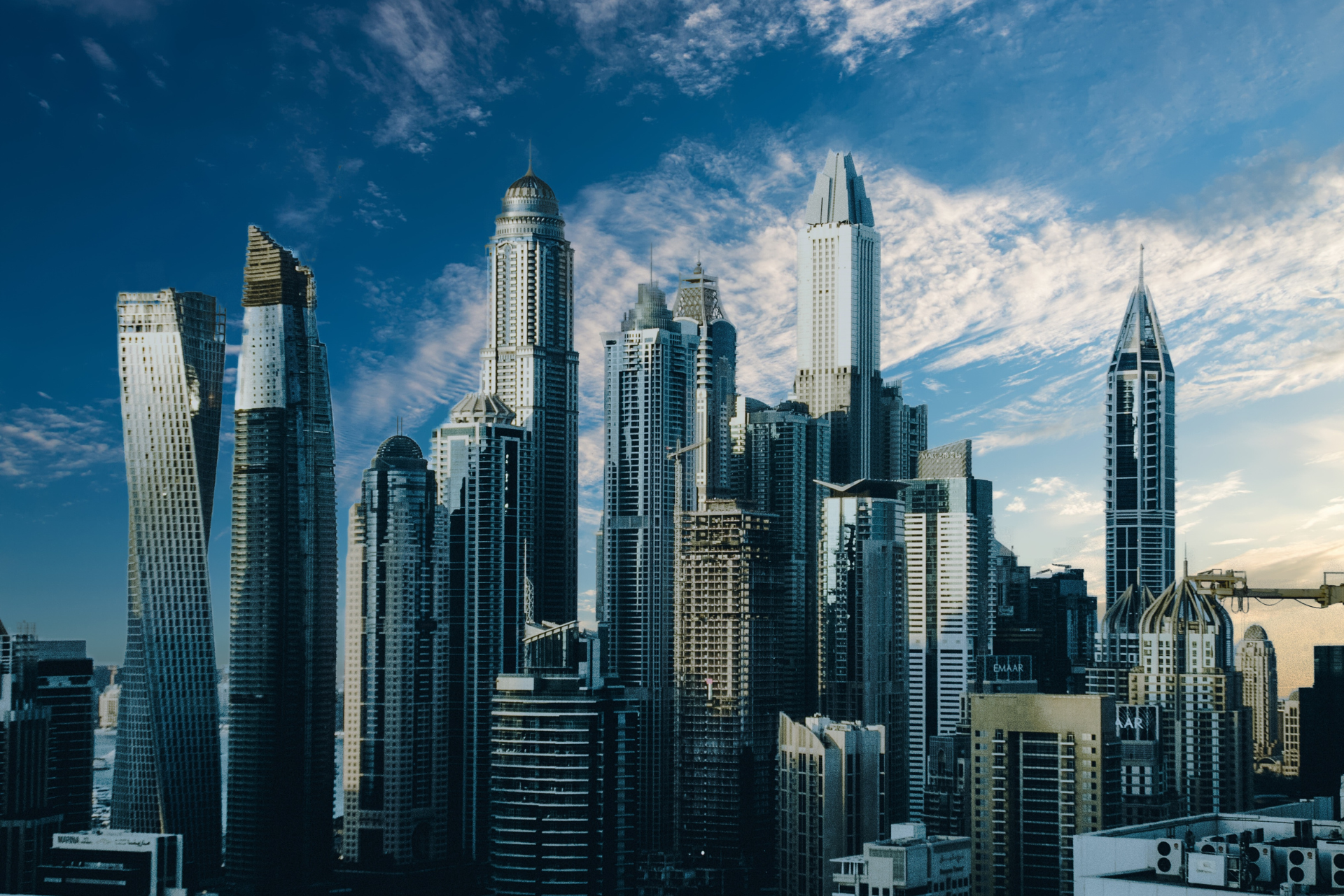
Going through ancient Egypt, Gothic, to modern times, buildings grow faster and faster in height. The sustainability of the project and ease of construction is one of the important factors of the projects, but many people have "made things difficult" for themselves when building buildings with shapes that easily recognize many problems in their construction and use. Spiral is one of those striking styles, but people are even "crazier" when planning to build buildings that twist themselves over time. Because of these difficult DIYs, the world has twisted buildings with their own histories.
Turning Torso

Turning Torso is a skyscraper in Malmö, Sweden. It was designed by Spanish architect Santiago Calatrava and officially opened on August 27, 2005. The tower reaches a height of 190 meters with 54 storeys. Upon completion, it was the tallest building in Scandinavia and the second tallest building in Europe, after the 264 meter-tall Triumph-Palace in Moscow.
The design of the tower is based on a sculpture by Calatrava called Turning Torso, from a piece of white marble based on the twisting posture of the human body.
The main reason for the construction of Turning Toso was to create a new symbol for Malmö to replace the famous crane Kockums, the symbol of Malmö's shipbuilding industry, which was relocated in 2002.
Construction began in the summer of 2001, the building is composed of nine segments with a pentagonal cross section, each with five floors. Plus eight gaps between the segments, which are essentially the same as one floor. The floors spiral up clockwise, the top floor rotates ninety degrees relative to the ground floor.The main reason for the construction of Turning Toso was to create a new symbol for Malmö to replace the famous crane Kockums, the symbol of Malmö's shipbuilding industry, which was relocated in 2002.
Construction began in the summer of 2001, the building is composed of nine segments with a pentagonal cross section, each with five floors. Plus eight gaps between the segments, which are essentially the same as one floor. The floors spiral up clockwise, the top floor rotates ninety degrees relative to the ground floor.
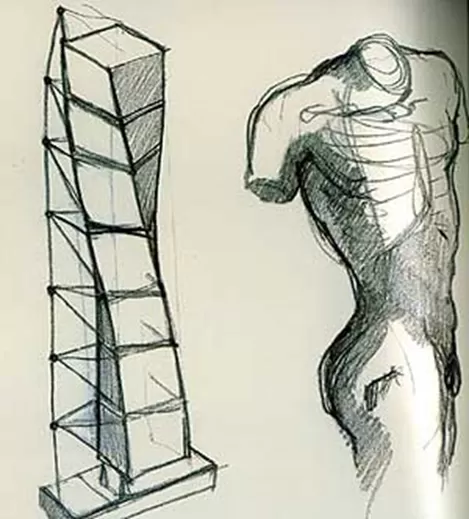
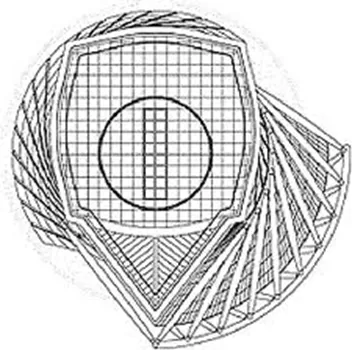
Each floor is an irregular pentagon rotating around a vertical circular core. A steel frame following one corner of the pentagon also twists up, but it seems that this frame has more of an architectural task than a torsion-resistant structure for the building.
The bottom two segments are the office area. Blocks 3 to 9 are for 147 luxury apartments.
This building applies many assembly technologies. Except for a circular core shaped by a self-climbing sliding coffa (concrete mold) and the main floor poured on-site with concrete, most other structures are in assembled form. Reinforcing steel is pre-assembled into each cage, craned to install it into position, then the cable is threaded through and done. Not only are the walls prefabricated into panels, but the stairs are also prefabricated into each span. Crane up and assembly is a notable point of this project.
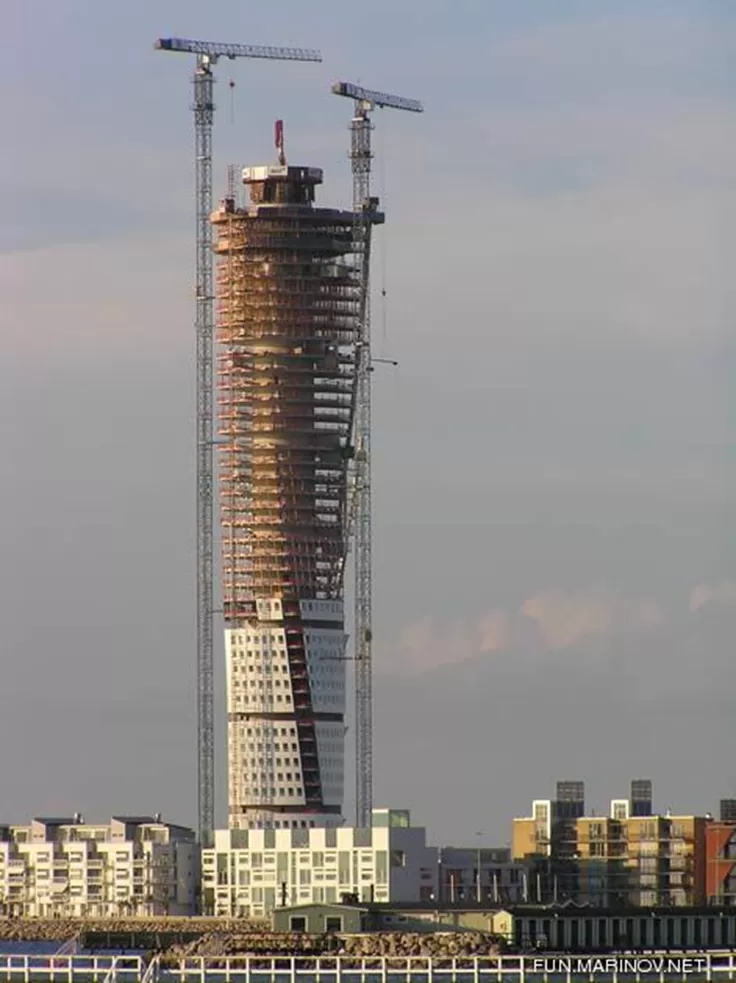
Despite applying modern construction methods, the project was also delayed due to prolonged snowstorms in Northern Europe.
After being in use for about a year, on August 18, 2006, an Austrian skydiver named Felix Baumgartner parachuted onto the roof of Turning Torso and then jumped off it immediately afterward without the homeowner's knowledge.
In addition to its strange shape, some people also believe that the building can create tornadoes due to its twisted architecture. Worrying even further, people imagine how it will fall when hit by a meteorite or a plane similar to 9/11.
Because the building is private, visiting inside is limited. Since 2009, the public has been able to visit the building, but only for one week every summer, and with a limited number of pre-booked tickets to enter a Swedish icon.
One of the symbols of Sweden
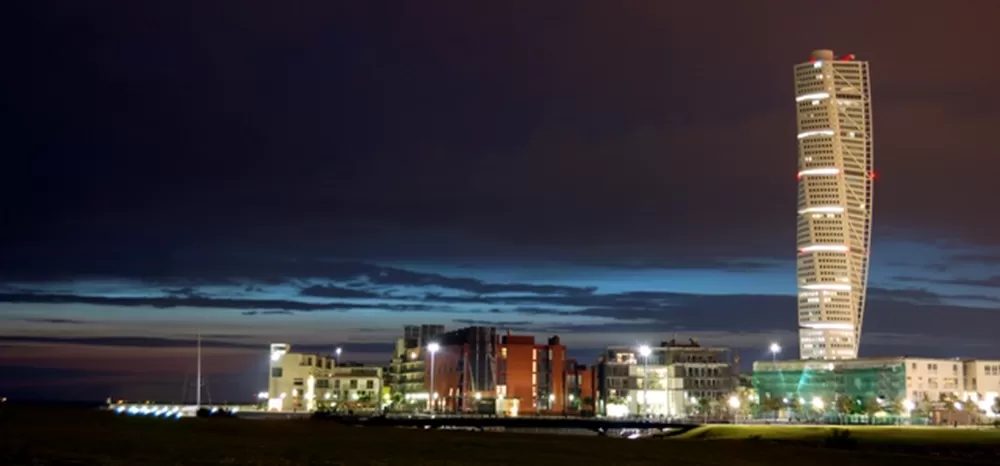
Turning Torso at night









Comment